

Most people who get rejected on national television quietly disappear. James Martin did the opposite. He walked away from Shark Tank — twice — turned down offers from Kevin O’Leary, Mark Cuban, and Robert Herjavec combined, and built Copa Di Vino into a single-serve wine brand stocked in over 13,000 stores across all 50 states. No investor dollars. No equity sacrificed. Just a patented wine cup and fifteen years of relentless execution.
So what is Copa Di Vino actually worth in 2026? Depending on which website you land on, you’ll see figures anywhere from $20 million to $91 million — and that gap isn’t sloppy reporting. It reflects something real and complicated about where this brand stands today. Before you accept any single number, you deserve the full story — the wins, the headwinds, and the honest truth behind one of Shark Tank’s most debated success stories.
Company Details
| Detail | Information |
|---|---|
| Company Name | Copa Di Vino |
| Founder | James Martin |
| Founded | 2009 |
| Headquarters | The Dalles, Oregon |
| Industry | Single-Serve Wine / Beverages |
| Parent Company | Splash Beverage Group (acquired December 2020) |
| Estimated Net Worth (2026) | $18M–$91M (see breakdown below) |
| Annual Revenue | $20M–$30M (analyst projections) |
| Cumulative Revenue Since Launch | $150M+ |
One thing most articles skip entirely: Copa Di Vino is no longer an independent company, and that matters enormously for how its “net worth” gets calculated. Since December 2020, it has operated as a brand within Splash Beverage Group (ticker: SBEV) — a publicly traded company whose own financials are visible to anyone willing to look them up. Those financials tell a story that dramatically changes how you should interpret any valuation figure you read.
Here’s a quick clarification that saves a lot of confusion: brand valuation, annual revenue, and market cap are three completely different things. Revenue is what a company earns. Market cap is what public investors say the whole company is worth. Brand valuation is an estimated contribution of one brand within a larger entity. When sources disagree wildly on Copa Di Vino’s net worth, it’s usually because they’re measuring different things without saying so.
Shark Tank Story That Changed Everything
Copa Di Vino holds a rare distinction in Shark Tank history — it’s one of the very few brands that appeared twice, declined every offer both times, and went on to build genuine national scale. Most “I turned down the Sharks” stories end quietly. This one didn’t.
Season 2 — The First Appearance (2011)
James Martin walked into the Tank asking for $300,000 in exchange for 5% equity — a valuation of $6 million. For a brand barely two years old and still finding its retail footing, that was an aggressive ask. Kevin O’Leary, never one to pay full price for anything, countered with $600,000 for a 51% stake — essentially asking for control of the company in exchange for capital and connections.
Martin declined and walked. On TV it looked bold, even reckless. In hindsight, it was a clean read of a bad deal. Handing over majority ownership of a patented, first-of-its-kind product to outside investors — before it had proven national distribution — would have handed away the company’s upside at exactly the wrong moment. What Martin understood, and O’Leary didn’t fully appreciate, was that the patent was the asset. Distribution could be built. You can’t un-give away 51%.
What happened next made Martin look even smarter. The Shark Tank appearance, despite producing no deal, generated a massive wave of consumer awareness — exactly the kind of free national advertising that no $300,000 check could buy. Sales responded immediately.
Season 3 — The Return (2012)
A year later, Martin came back with a number that silenced the room: in twelve months, sales had jumped from $600,000 to $5 million. That’s not gradual growth — that’s proof of concept at scale. The Shark Tank bump had been real, and Martin had channeled it into hard retail expansion.
This time, three Sharks joined forces. Kevin O’Leary, Mark Cuban, and Robert Herjavec offered a combined $600,000 for 30% equity. The terms were better. The coalition was formidable. Martin still said no.
Cuban called him out for not being serious. Herjavec literally walked off the set. The edit made Martin look stubborn. But consider the math: Copa Di Vino had just grown 8x in twelve months without a single investor dollar. Why would Martin surrender 30% of a rocket ship that was already off the ground?
What Most Competitors Get Wrong About This Story
The standard Shark Tank narrative frames Martin’s rejections as an inspirational “bet on yourself” moment. That’s true, but it misses the more precise lesson. Most Shark Tank companies need the Sharks — for distribution contacts, for operational mentorship, for credibility with major retailers. Copa Di Vino didn’t, because it had already cracked those doors independently. Martin’s leverage was real, not imagined. Refusing the deal wasn’t stubbornness; it was an accurate assessment of his negotiating position.
There’s also a marketing dimension nobody discusses: the rejection itself became the brand’s story. Every time someone retells the “he said no to the Sharks twice” narrative — including right now in this article — Copa Di Vino gets free advertising. That’s a brand asset with no line item on any balance sheet.
Read More: Cory Chase Net Worth 2026: Inside the MILF Star’s Fortune
The Story of How Copa Di Vino Made Its Fortune
Disruptive Innovation in the Wine Business
Wine has a convenience problem that the industry spent decades pretending didn’t exist. Open a bottle, and you’re committed to drinking most of it or watching it oxidize over the next 48 hours. Bring wine to a concert, a picnic, or a hotel room, and you’re dealing with corkscrews, glassware, and spills. For the casual wine drinker — not the collector, not the connoisseur — traditional wine packaging is simply inconvenient.
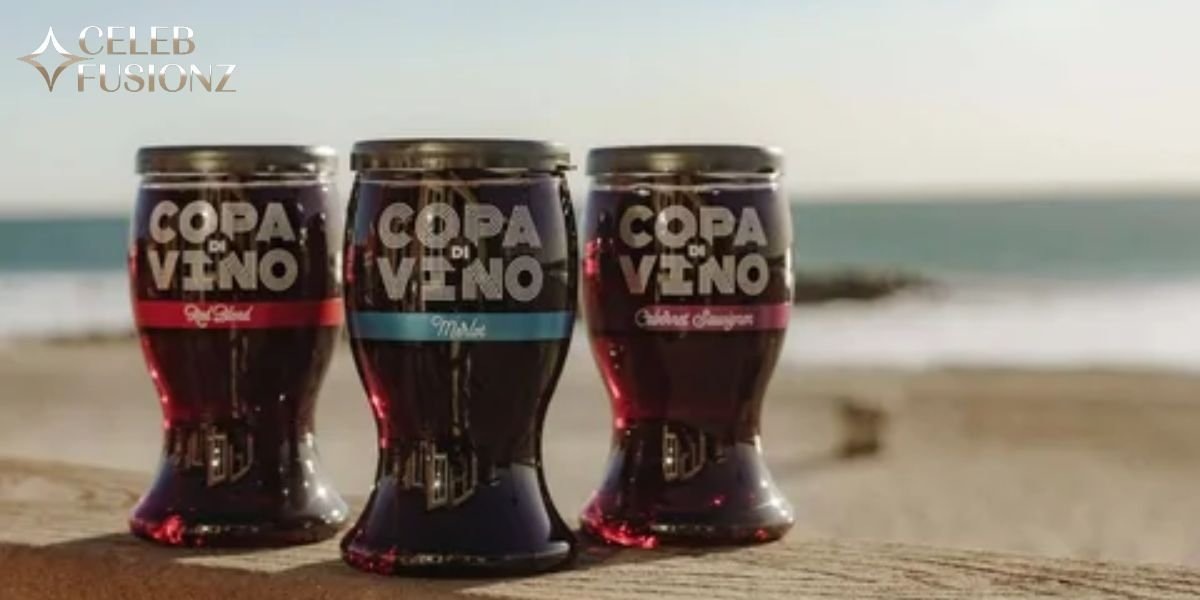
James Martin didn’t invent single-serve wine. He saw it on a French bullet train in 2007, where passengers were handed small sealed wine glasses during their journey through wine country. What he invented was the American version: a patented, glass-shaped container made from food-safe plastic that seals the wine inside without a cork, preserves freshness for over twelve months without refrigeration, and can be consumed directly from the container or saved with the splash-proof lid intact.
That’s not just clever packaging. It’s a shelf-life technology. Traditional wine deteriorates within days of opening. Copa Di Vino’s sealed technology gives retailers, hotels, and venues a product they can stock without worrying about spoilage. That operational advantage — not just the consumer convenience — is a big reason the brand landed in 13,000+ locations.
The patent matters for a second reason: licensing revenue. Other beverage companies pay Copa Di Vino to use its proprietary sealing and packaging technology. This creates income that flows in whether or not a single cup of Copa Di Vino wine gets sold. It’s the highest-margin revenue stream in the business and the one most competitor articles completely ignore.
Think of it like Keurig. The coffee wasn’t necessarily better than what you’d make with a French press — the format was the innovation. Copa Di Vino applied the exact same logic to wine: take a social beverage, make it personal-sized and portable, and watch an entirely new consumption occasion open up.
The Retail Distribution Strategy
Here’s a number that deserves more attention than it usually gets: 13,000 retail locations across all 50 U.S. states. That’s not winery-level distribution. That’s consumer packaged goods (CPG) scale — the same tier as established snack brands and household names that have been on shelves for decades.
Building that footprint took fifteen years of methodical work. The key retail partners and why each one matters:
- Walmart — volume and mainstream accessibility at the largest grocery retailer in the country
- 7-Eleven and Terrible Herbst — impulse purchase placement; the customer who grabs a Copa Di Vino at a convenience counter wasn’t planning to buy wine that day
- Kroger and Target — grocery legitimacy and placement alongside established wine brands
- Marriott and Hilton Garden Inn — premium hospitality placement where a single-serve cup feels curated rather than cheap
- Dodger Stadium and sports venues — the perfect single-serve environment, where carrying a bottle is impossible and wanting a drink is inevitable
The Anheuser-Busch distribution partnership was arguably the single biggest strategic move in Copa Di Vino’s history. Rather than building a national logistics operation from scratch — which would have cost tens of millions and taken years — Martin plugged Copa Di Vino into an existing beer distribution infrastructure that already had relationships with every major retailer in the country. That’s the kind of shortcut that only an operator with genuine distribution intelligence would think to pursue.
Product Variety and Customer Appeal
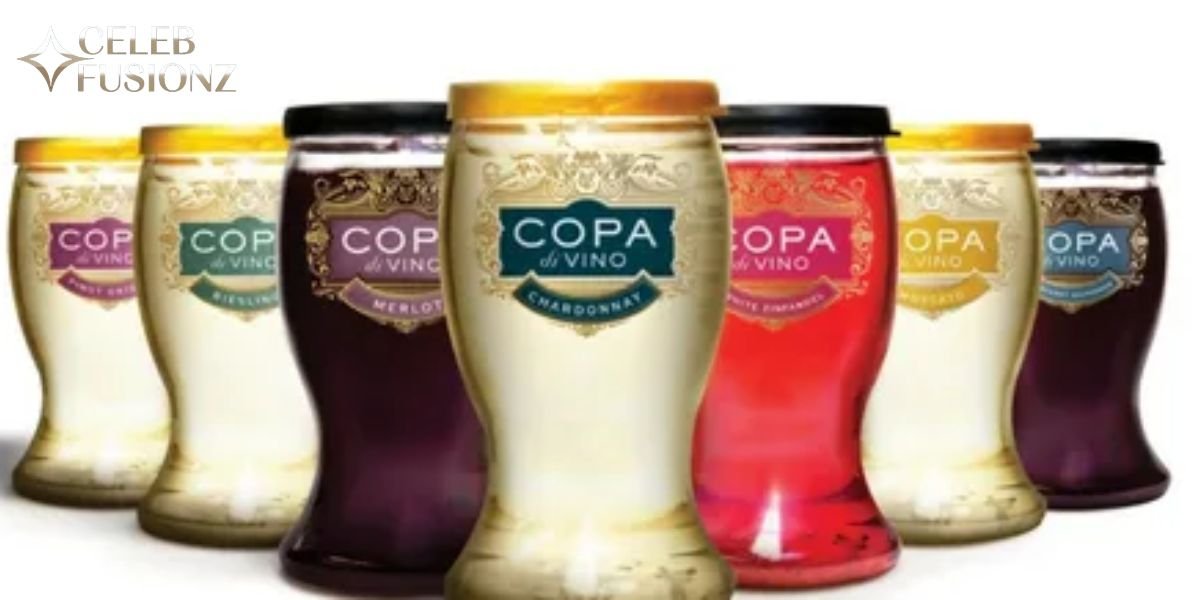
Copa Di Vino currently offers eight varietals: Moscato, White Zinfandel, Pinot Grigio, Merlot, Chardonnay, Cabernet Sauvignon, Sauvignon Blanc, and a Red Blend. At $3.49 per glass and $13.96–$20.94 for variety packs, the pricing occupies what retailers call the “affordable luxury” zone — expensive enough to feel like a treat, cheap enough to be an impulse buy.
That positioning is deliberate and smart. The typical Copa Di Vino customer isn’t a wine enthusiast comparing tannin structures. She’s a woman at a concert who wants one glass of Chardonnay without buying a full bottle. He’s a business traveler who wants a Cabernet in his hotel room without paying $18 for a minibar pour. They’re at a sports game, a festival, a family reunion — occasions where wine drinking used to be inconvenient or impossible.
The U.S. single-serve wine market was valued at $172.4 million in 2025 and is projected to reach $245.9 million by 2035, growing at a CAGR of 3.6%. Copa Di Vino didn’t just benefit from this trend — it helped create the category that made the trend measurable.
The Splash Beverage Group Purchas
In December 2020, Splash Beverage Group acquired Copa Di Vino for $5.98 million — a figure that surprised many observers who expected a higher price given the brand’s national retail footprint.
The deal structure included $2 million in cash, a $2 million promissory note, and a variable number of SBEV common stock shares worth up to $1.98 million, contingent on Copa Di Vino hitting future revenue targets.
The modest price makes more sense once you understand the context. Before the sale, Copa Di Vino’s annual revenue had slipped back to approximately $2 million — a significant dip from the $5 million peak reported during the Shark Tank years. National distribution doesn’t automatically mean national sales volume, and the brand had been running on family-scale operations without the marketing infrastructure to maximize its shelf presence. Splash acquired a brand with enormous distribution reach but underperforming revenue — exactly the kind of deal a turnaround-focused beverage group looks for.
Post-acquisition, the numbers improved considerably. Revenue climbed from $2 million to roughly $6 million by 2022, with analyst projections suggesting $20.8 million by 2025. James Martin stayed on as Founder and Chief Innovation Officer, reporting to Splash’s president — a structure that let him cash out partially while keeping his expertise inside the brand.
Here’s the critical context that most Copa Di Vino articles either don’t know or choose not to share.
As of early 2026, Splash Beverage Group trades at around $0.52 per share with a market cap of approximately $1.6 million. The company reported trailing twelve-month revenue of $4.2 million, a gross margin of 8.6%, and a net loss of $23.8 million. More concerning, Splash acknowledged in SEC filings that it had not generated revenue since March 2025 due to a lack of capital.
This isn’t a footnote. It’s the single most important fact for anyone trying to understand Copa Di Vino’s valuation in 2026. A brand operating inside a parent company with a $1.6 million market cap and $23.8 million in annual losses cannot credibly be valued at $70–$91 million on its own. Those figures, widely cited across the web, reflect optimistic brand-level projections built before Splash’s financial deterioration became this severe.
A more grounded estimate puts Copa Di Vino’s current valuation around $20 million — stable, if not spectacular, but supported by real retail presence and a genuine product that solves a real problem.
The honest question Copa Di Vino faces in 2026 isn’t whether the brand has value. It clearly does. The question is whether Splash Beverage Group can provide the capital and operational support needed to grow it — or whether Copa Di Vino would be better served under a different, better-capitalized owner.
James Martin: Copa Di Vino Revealed
From Oregon Farmer to Wine Entrepreneur
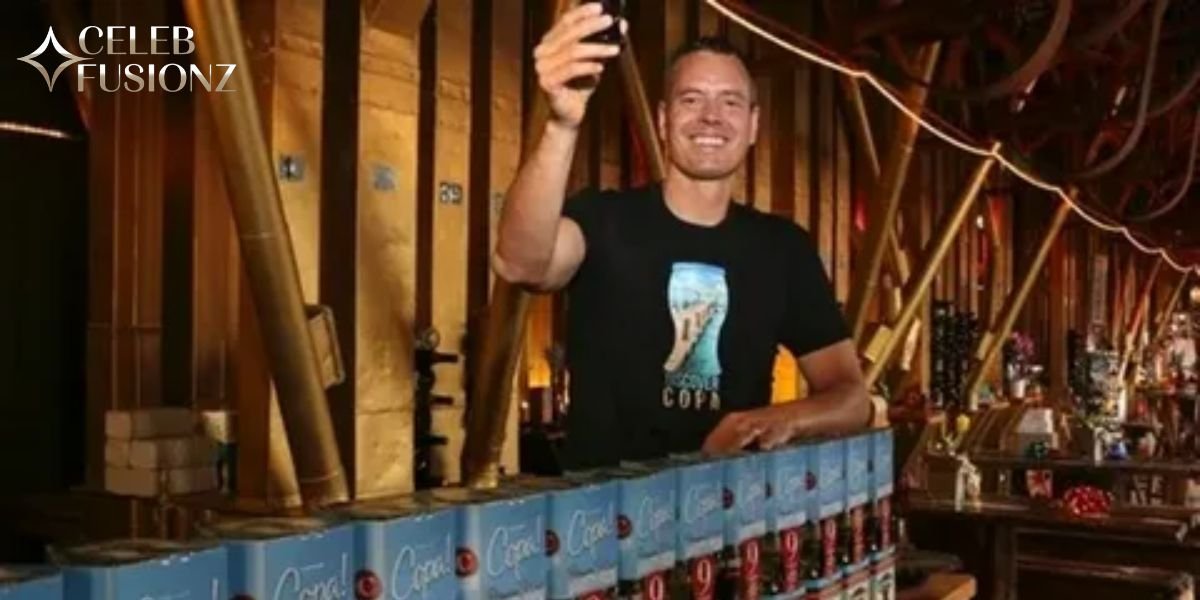
James Martin’s background shapes every decision he made with Copa Di Vino — and it’s more unusual than the standard “Oregon farmer builds wine brand” summary suggests.
His family goes back seven generations on Oregon land. That’s not just a biographical detail — it’s a cultural inheritance of patience, long-term thinking, and respect for process. Farmers don’t build things for next quarter. They plant for next decade. That mindset shows up repeatedly in the Copa Di Vino story: the two-year technology development before launch, the methodical retail-by-retail distribution build, the willingness to walk away from quick money on Shark Tank because the long-term math didn’t work.
What makes Martin genuinely unusual in the wine industry is his technical background. He studied electrical engineering at Linn-Benton Community College and mathematics at Portland State University — disciplines built around systems thinking and problem-solving, not tradition or aesthetics. When he looked at wine, he didn’t see a cultural product to protect. He saw a delivery mechanism with a packaging problem waiting to be engineered away.
His 2003 role heading Quenett beverage company gave him the operational vocabulary to eventually run Copa Di Vino: understanding distribution logistics, retail buyer relationships, production scaling, and the mechanics of moving a beverage from manufacturing to shelf. By the time he pitched on Shark Tank in 2011, he wasn’t a first-time entrepreneur fumbling through negotiations. He was an experienced beverage operator who understood his leverage precisely.
The 2007 France trip with his wife Molli is often romanticized as a sudden flash of inspiration. The reality is more deliberate. Martin had already purchased an abandoned flour mill in The Dalles in 2005 — two years before the France trip — and was converting it into Sunshine Mill Winery. He wasn’t waiting for an idea. He was already building the infrastructure and looking for the right product to anchor it.
James Martin Personal Net Worth
Honestly, James Martin’s personal net worth in 2026 is difficult to pin down precisely — and anyone who gives you a single confident figure is probably guessing. Estimates range from $4 million on the conservative end to $25 million on the optimistic end, and both figures can be rationalized depending on what you count.
What actually built his wealth:
- Retained equity through Copa Di Vino’s growth years — the stake he protected by declining the Sharks is the foundation of everything that followed
- The Splash Beverage Group acquisition proceeds — the $2 million cash portion was clean money; the promissory note and stock component are more complicated
- The SBEV stock consideration — this is where things get uncomfortable. A meaningful portion of Martin’s acquisition payout came in Splash Beverage Group shares. Given that SBEV now trades below $0.55 — down from significantly higher levels — the real value of that stock portion has eroded substantially from the headline deal figure
- Oregon Mountain Estate — Martin has maintained involvement in a separate wine venture since at least 2012, suggesting he diversified rather than going all-in on Copa Di Vino post-acquisition
- Ongoing salary and distributions — as Founder and Chief Innovation Officer of a revenue-generating brand, he has presumably drawn compensation since the acquisition
The most grounded honest estimate for Martin’s personal net worth in 2026 lands somewhere between $4 million and $15 million — real wealth built on genuine innovation, tempered by the reality that a significant portion of his exit was tied to a company whose stock has declined dramatically.
Revenue Streams and Business Model
Copa Di Vino generates income through five distinct channels, and understanding each one explains why the brand has remained durable even through its parent company’s turbulence:
Retail Sales form the primary engine. Grocery stores, liquor chains, and convenience stores across 13,000+ locations create high-volume, consistent turnover. The margin per unit is modest, but the scale is what produces the revenue numbers analysts track.
E-Commerce has grown into a meaningful secondary channel. Direct sales through copadivino.com and fulfillment via platforms like Instacart serve consumers who discovered the brand in-store and want replenishment without a trip. Post-pandemic normalization of alcohol e-commerce helped this channel meaningfully.
Wholesale to Hospitality — hotels, restaurants, golf courses, and premium bars — typically offers higher per-unit margins than grocery retail. A hotel minibar or room service markup on a Copa Di Vino cup produces substantially more profit per unit than a Walmart end-cap sale.
Event and Venue Sales through stadiums, concerts, and festivals represent the single-serve format at its most natural. These environments actively discourage glass, make bottle-carrying impractical, and present the kind of captive audience that makes impulse beverage purchases inevitable. Dodger Stadium placement is a high-visibility win — not just for revenue, but for brand perception.
Licensing Revenue from the proprietary packaging technology is the most overlooked piece of the business model. Other beverage companies pay to use Copa Di Vino’s patented sealing system. This revenue stream requires no inventory, no marketing spend, and no distribution effort — it’s pure margin flowing from an asset that was built once and generates income indefinitely.
Copa Di Vino has reportedly crossed $150 million in total cumulative sales since its 2009 launch. Current annual revenue projections sit between $20–30 million, though the parent company’s capital constraints create real uncertainty around the upper end of those figures.
Market Position and Competitive Advantages
Copa Di Vino built a genuinely defensible market position — not just through clever marketing, but through structural advantages that take years and significant capital to replicate.
First-mover status in the single-serve premium wine cup category is real and valuable. Copa Di Vino didn’t just enter a market — it created the retail category. That distinction means buyer relationships at Walmart, Kroger, and Target that predate any competitor by a decade or more. Shelf space in grocery is finite and fiercely contested; Copa Di Vino has years of proven sell-through data that any new entrant lacks.
The patent functions as both a competitive moat and a revenue generator simultaneously. Competitors can’t simply copy the packaging without licensing fees or expensive workarounds. And those who do license it end up paying Copa Di Vino for the privilege.
Distribution depth built over fifteen years cannot be shortcut. Getting into 13,000 retail locations requires individual buyer meetings, promotional agreements, slotting fees, and sustained sell-through performance at each account. A well-funded competitor entering tomorrow would need years to replicate that footprint.
The brand mythology around the Shark Tank rejection functions as perpetual marketing. Every entrepreneurship podcast, business article, and Shark Tank retrospective that references Copa Di Vino generates awareness at zero cost. That’s remarkably rare for a beverage brand of this size.
However, the competitive landscape in 2026 demands an honest assessment of real threats:
Spirits-based RTDs surged approximately 20% in 2025, while wine-based RTDs climbed around 14% — meaning consumers are increasingly choosing convenient wine formats, but they’re also considering canned wines and spirit-based cocktail alternatives that Copa Di Vino doesn’t directly compete in.
U.S. wine sales dropped approximately 6% in 2024 — the steepest decline in decades — driven by a structural demographic shift as younger consumers drink less wine than their predecessors. Copa Di Vino’s convenient format partially insulates it from this trend, but no wine brand is entirely immune.
The U.S. wine industry entered 2026 at a crossroads, dealing with an ongoing demand reset among younger generations and persistent oversupply of bulk wine. Copa Di Vino’s affordable price point and convenient format position it better than premium bottle wines to weather this environment — but “better positioned” isn’t the same as immune.
Recent Developments and Future Outlook
Despite its parent company’s challenges, Copa Di Vino continued expanding its retail footprint through 2025 and into 2026:
- Walmart Golden Ticket Award for the premium single-serve wine lineup — Walmart’s internal recognition program for high-performing products signals better shelf placement and potentially larger order volumes going forward
- 115 Terrible Herbst convenience stores across Las Vegas — a high-traffic, tourism-driven market that suits the single-serve format perfectly
- Coastal Beverage Company alliance in North Carolina — expanded northeastern footprint through a regional distributor with established grocery relationships
- Travel Centers of America placement across 70 locations in Texas — targeting road travelers who want a single glass and don’t want to commit to a full bottle
- Dodger Stadium and major sports venues — premium placement that reinforces the lifestyle positioning Copa Di Vino has always aimed for
These are genuine wins. The product is still moving and still landing in new locations. That matters.
But the shadow over all of it is Splash Beverage Group’s financial condition. The company’s operating loss reached $16 million on operating margins of -386.2%, with net income at -$23.8 million. A business burning that much cash while generating only $4.2 million in trailing revenue is fighting for survival, not investing in brand growth. Marketing budgets, innovation budgets, and distribution support all get squeezed when a parent company is managing a capital crisis.
The overall strategy of Splash Beverage Group will largely determine whether Copa Di Vino rises above its current valuation — and the public company’s operating losses and stock volatility have raised real concerns about long-term growth capacity.
The most realistic path to Copa Di Vino reaching the $100 million valuations some analysts project runs through a change in ownership — not continued operation inside a distressed public company. A strategic acquisition by a major wine or spirits conglomerate like E&J Gallo, Constellation Brands, or even a private equity group focused on beverage CPG brands would unlock the distribution investment and marketing firepower the brand needs to fully realize its potential.
The U.S. single-serve wine market is forecast to grow from $172.4 million in 2025 to $245.9 million by 2035 — the category Copa Di Vino pioneered is expanding. The question is whether the brand that created it will be positioned to lead that growth or simply participate in it.
FAQs
What is Copa Di Vino’s net worth in 2026?
Copa Di Vino’s estimated net worth in 2026 ranges between $18 million and $91 million, depending on the valuation methodology and parent company financial performance.
Did Copa Di Vino ever make a deal on Shark Tank?
No. James Martin appeared twice and declined every offer, including a three-Shark combined deal worth $600,000 for 30% equity.
Who owns Copa Di Vino now?
Splash Beverage Group acquired Copa Di Vino in December 2020 for $5.98 million. The brand still operates under their publicly traded portfolio today.
What is James Martin’s personal net worth in 2026?
James Martin’s personal net worth is estimated between $4 million and $15 million, built through Copa Di Vino equity, acquisition proceeds, and wine ventures.
Where can I buy Copa Di Vino?
Copa Di Vino is available at Walmart, Target, Kroger, 7-Eleven, major hotels, sports stadiums, and online directly at copadivino.com nationwide.
How much does Copa Di Vino cost?
Individual cups retail at $3.49 each. Variety packs range from $13.96 to $20.94 depending on retailer and selected pack size.
Is Copa Di Vino still in business in 2026?
Yes, Copa Di Vino actively distributes across 13,000+ U.S. retail locations, though parent company Splash Beverage Group faces serious ongoing financial challenges.
What wine varieties does Copa Di Vino offer?
Copa Di Vino offers eight varietals including Moscato, Chardonnay, Merlot, Cabernet Sauvignon, Pinot Grigio, Sauvignon Blanc, White Zinfandel, and Red Blend.
Conclusion
Copa Di Vino’s journey from a rejected Shark Tank pitch to 13,000 retail locations isn’t just an inspiring entrepreneur story — it’s a masterclass in knowing your leverage and protecting it fiercely. James Martin built something genuinely rare: a patented product that created its own retail category, scaled nationally without outside equity, and generated over $150 million in cumulative sales. That foundation is real and it’s durable.
What 2026 actually reveals, though, is that great brands still need great ownership behind them. Copa Di Vino’s next chapter depends far less on the wine inside the cup and far more on who controls the business around it. The product earned its place on those shelves. Now it needs the right hands to take it further.

Abdul Wasif is a writer, WordPress developer, and digital publisher who builds and manages multiple niche websites across entertainment, inspirational content, and online media.
He specializes in creating SEO-focused content platforms covering celebrity net worth, biographies, lifestyle topics, inspirational blessings, and creative entertainment content.
Alongside writing and publishing content, Abdul works with WordPress to design and develop fast, user-friendly websites optimized for search engines and global audiences.
His goal is to build informative and engaging digital platforms that provide value to readers, particularly audiences in the United States and the United Kingdom.