

Virginia Mayo was one of the defining leading ladies of 1940s Hollywood — the sultry Verna in White Heat, Danny Kaye’s leading lady, and for a time the biggest box-office draw at Warner Bros. She died on January 17, 2005, aged 84, after a career that stretched from vaudeville to 1990s television. Because she has been gone for two decades, almost everything written about her money is guesswork. The only net-worth figure attached to her name by any named source is an estimate of $4 million at her death, published by The Wealth Record in 2024. This page sets out what that number rests on, what her career actually looked like, and which details circulating online — including a $10 million figure an earlier version of this article printed — were never documented at all.
Virginia Mayo at a Glance
| Detail | Information |
|---|---|
| Born | Virginia Clara Jones, November 30, 1920, St. Louis, Missouri |
| Died | January 17, 2005, Thousand Oaks, California, aged 84 |
| Cause of death | Pneumonia and complications of congestive heart failure |
| Occupation | Actress (stage, film and television), former dancer |
| Years active | 1937–1997 |
| Studios | Samuel Goldwyn, then Warner Bros. |
| Best-known films | The Best Years of Our Lives (1946), White Heat (1949), The Secret Life of Walter Mitty (1947) |
| Spouse | Michael O’Shea (married 1947; died 1973) |
| Children | One daughter, Mary Catherine O’Shea |
| Net worth at death | Estimated $4 million (The Wealth Record, 2024) — the only published estimate |
Virginia Mayo’s Net Worth at Death: What Is Actually Documented
Start with the uncomfortable truth: nobody really knows what Virginia Mayo was worth, because nobody with access to her finances has ever published them. There is no probate reporting, no estate sale coverage, and no financial profile from her lifetime — she was a salaried studio contract player, not a modern celebrity with publicly dissected deals. Celebrity Net Worth, which maintains profiles on thousands of stars, has no entry for her at all. The one figure in circulation comes from The Wealth Record, which estimated her net worth at $4 million in a February 2024 profile. That is an editor’s estimate, not a documented fact, and it should be read that way.
An earlier version of this article put her fortune at $10 million and supported it with a detailed story — a $100-a-week starting salary, a strategic California real-estate portfolio, income tables broken down by source. None of that was sourced, and none of it can be found in any obituary, biography or reference work. It has been removed. We take the same approach here as with George Foreman’s net worth at his death: print the figure a named source will stand behind, attribute it clearly, and say plainly where the record runs out.
What can be said honestly about her money is structural. Mayo worked at the top of the studio system for roughly fifteen years, under contract first to Samuel Goldwyn and then to Warner Bros., when she was the studio’s biggest box-office draw in the late 1940s. Contract stars of that rank were genuinely well paid by the standards of the day — but they were employees on weekly salaries, not profit participants, and her contract terms were never published. There were no meaningful residuals for her era’s films either: the residual system that now pays actors for decades did not exist for work done in the 1940s and 1950s. After her film career cooled, she kept working for four more decades in television and on stage, which kept money coming in long after most of her contemporaries had stopped. A fortune in the low single-digit millions by 2005 is plausible on that record. Anything more precise is invention.
From St. Louis to Vaudeville: How Virginia Jones Became Virginia Mayo
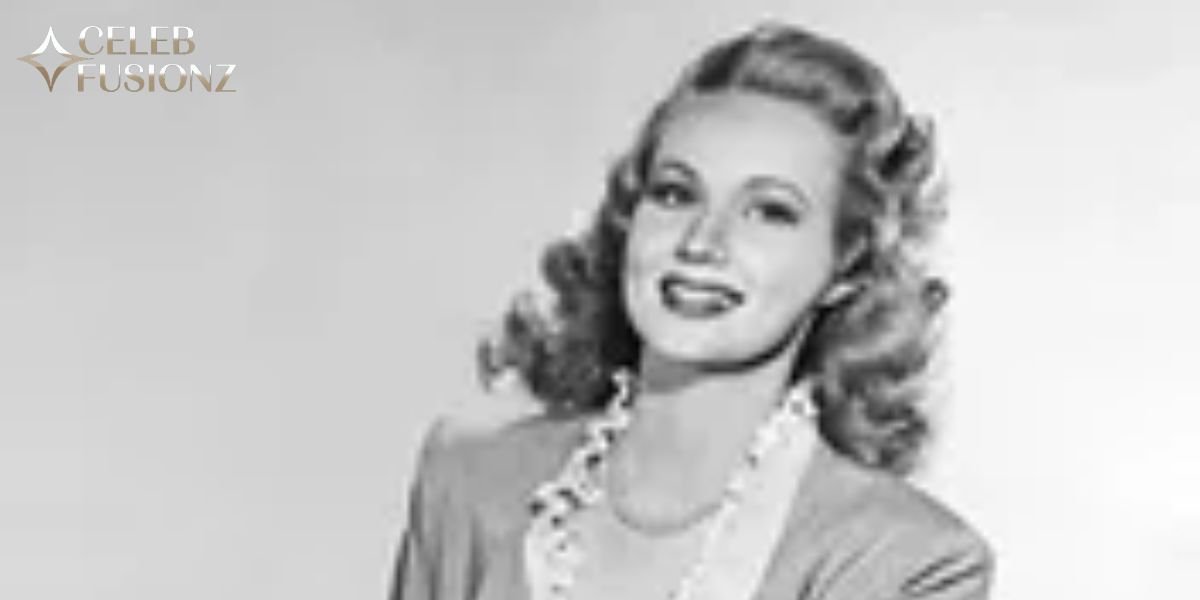
She was born Virginia Clara Jones in St. Louis, Missouri, on November 30, 1920, the daughter of newspaper reporter Luke Jones and his wife Martha Henrietta. She trained as a dancer at her aunt’s studio, graduated from Soldan High School at sixteen, and in 1937 joined the chorus line of the St. Louis Municipal Opera Theatre — The Muny — where she was soon doing a specialty act with two fellow hoofers. Then came three years of touring as a dancer in Andy Mayo’s vaudeville act; it was in those years that Virginia Jones took the stage name she would keep for the rest of her life, borrowed from the act itself.
By 1941 she had reached Broadway, appearing in the Eddie Cantor revue Banjo Eyes, where producer Samuel Goldwyn saw her and brought her to Hollywood. Her first film was Jack London (1943), playing the author’s wife opposite Michael O’Shea — the man she would marry four years later. Her first starring role, opposite Bob Hope in The Princess and the Pirate (1944), made her: Goldwyn then cast her as Danny Kaye’s leading lady in a run of Technicolor comedies, Wonder Man (1945), The Kid from Brooklyn (1946) and The Secret Life of Walter Mitty (1947).
The Warner Bros. Years: Best Years, White Heat and Box-Office Queen
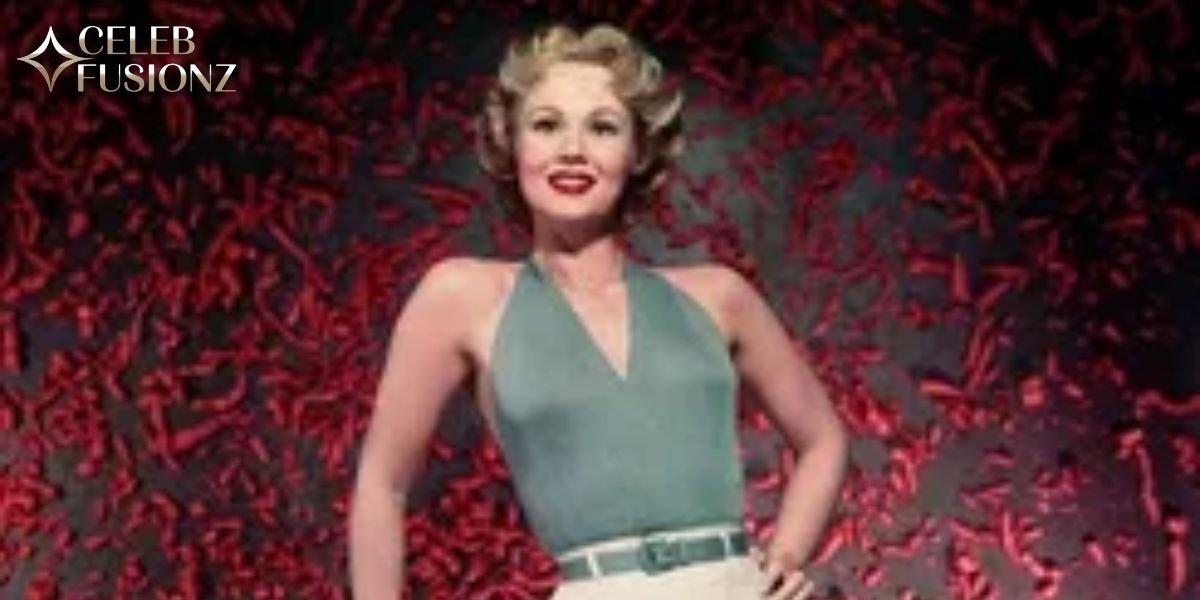
The film that proved she could act, not just decorate, was The Best Years of Our Lives (1946), William Wyler’s portrait of returning servicemen. Mayo played Marie Derry, the unfaithful wife of Dana Andrews’s character — a deliberately unsympathetic part — and the film became the biggest box-office hit since Gone with the Wind. Warner Bros. took over her contract, and by the late 1940s she was the studio’s top female draw, working constantly: Ronald Reagan was her most frequent leading man (seven films), with Dennis Morgan close behind.
Her signature role arrived in 1949: Verna Jarrett, the two-timing wife of James Cagney’s psychopathic Cody Jarrett in White Heat, one of the great gangster films. The same year she went west in Colorado Territory, a western remake of High Sierra, and she followed with The Flame and the Arrow (1950) opposite Burt Lancaster and Captain Horatio Hornblower (1951) opposite Gregory Peck — Warner Bros.’ most popular film of that year. She could play musicals, westerns, swashbucklers and noir, and the studio used all of it. The one famous misfire was The Silver Chalice (1954), in which she played the wicked Helena opposite a debuting Paul Newman — a flop so complete that Newman later took out an ad apologizing for his part in it.
| Film | Year | Co-star | Note |
|---|---|---|---|
| Jack London | 1943 | Michael O’Shea | Her film debut |
| The Princess and the Pirate | 1944 | Bob Hope | First starring role |
| Wonder Man | 1945 | Danny Kaye | First of the Kaye comedies |
| The Best Years of Our Lives | 1946 | Fredric March, Dana Andrews | Best Picture winner; her dramatic breakthrough |
| The Secret Life of Walter Mitty | 1947 | Danny Kaye | Enduring family favorite |
| White Heat | 1949 | James Cagney | Her signature role, Verna Jarrett |
| The Flame and the Arrow | 1950 | Burt Lancaster | Swashbuckling hit |
| Captain Horatio Hornblower | 1951 | Gregory Peck | Warners’ biggest film of the year |
| The Silver Chalice | 1954 | Paul Newman | Newman’s debut; a famous flop |
| The Man Next Door | 1997 | — | Her final film |
After the Studio System: Television, Stage and a Sixty-Year Career
When the studio contracts ended and film roles thinned in the 1960s, Mayo did what the smartest contract players did: she kept working wherever an audience remained. She guest-starred across three decades of American television — Wagon Train, Burke’s Law, The Love Boat, Remington Steele and Murder, She Wrote among them — and played a twelve-episode run on the soap Santa Barbara. She toured in stage productions and dinner theatre, sang her own numbers as she had in her Warner musicals, and in 1993 published a children’s Christmas book, Don’t Forget Me, Santa Claus. Her last film was The Man Next Door in 1997, closing a filmography that had opened sixty years earlier in a St. Louis chorus line.
Marriage, Family and Later Life
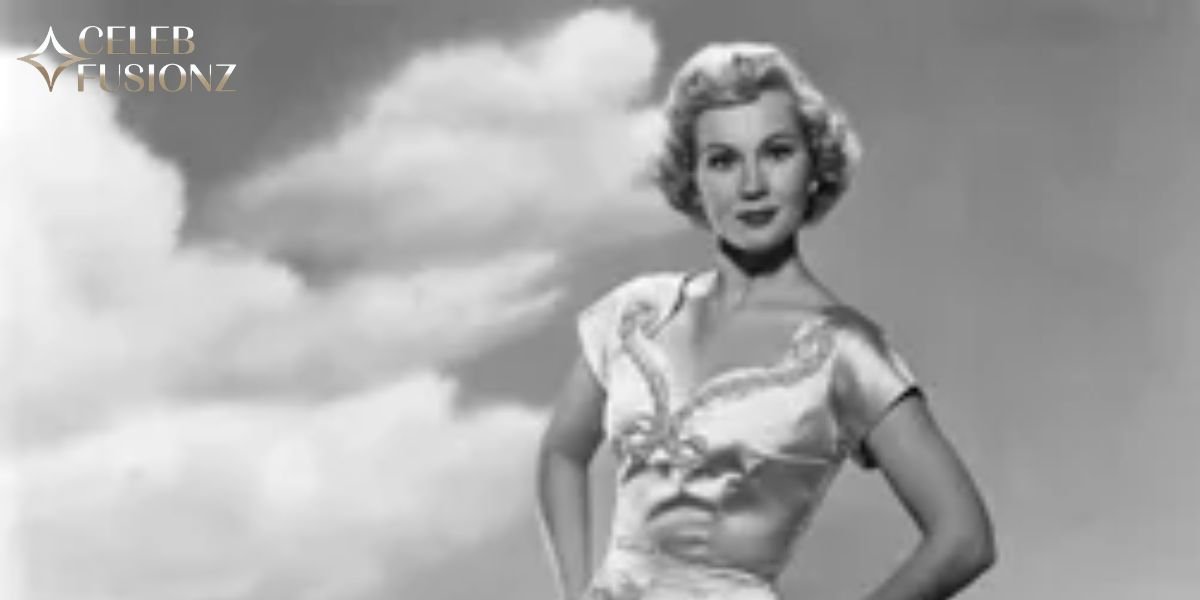
In 1947 Mayo married Michael O’Shea, her Jack London leading man, and the marriage lasted until his death in 1973 — by Hollywood standards of any era, a notably stable union. They lived in Thousand Oaks, California, and had one child, daughter Mary Catherine O’Shea; Mayo later had three grandchildren. She did not remarry. In her later years she converted to Roman Catholicism, remained a lifelong Republican, and in 2002 published her memoir, Virginia Mayo: The Best Years of My Life.
Death and Legacy
Virginia Mayo died on January 17, 2005, aged 84, at a nursing home in Thousand Oaks. The cause was pneumonia with complications from congestive heart failure. She was buried beside Michael O’Shea at Pierce Brothers Valley Oaks Memorial Park in Westlake Village, California. Her honors were of the permanent kind: a star on the Hollywood Walk of Fame at 1751 Vine Street — hers was among the first awarded — and a star on the St. Louis Walk of Fame, awarded in 1996 in the city where she had started as a teenage dancer. Her films, above all White Heat and The Best Years of Our Lives, never left circulation, which is more than most of her generation of stars can claim.
Frequently Asked Questions
What was Virginia Mayo’s net worth when she died?
The only published estimate is $4 million, from The Wealth Record (2024). No estate or probate figure was ever made public, and the $10 million figure repeated on some sites is unsourced.
What happened to Virginia Mayo?
She worked in television and on stage into the 1990s, retired to Thousand Oaks, California, and died on January 17, 2005, aged 84, of pneumonia and complications of congestive heart failure.
Who was Virginia Mayo’s husband?
Actor Michael O’Shea, her leading man in Jack London (1943). They married in 1947 and remained married until his death in 1973. She never remarried.
What was Virginia Mayo’s most famous role?
Verna Jarrett in White Heat (1949), opposite James Cagney. Her dramatic turn as Marie Derry in The Best Years of Our Lives (1946) runs it close.
How tall was Virginia Mayo?
Standard reference listings give her height as 5 feet 5 inches (1.65 m).
Where is Virginia Mayo buried?
Beside her husband at Pierce Brothers Valley Oaks Memorial Park in Westlake Village, California.
The Bottom Line
Virginia Mayo’s net worth at death is best stated the way the evidence allows: an estimated $4 million, per The Wealth Record — the only figure any named source has published, offered for a woman whose actual finances were never public. The invented $10 million version, with its real-estate portfolio and salary tables, told a better story and a falser one. What needs no estimating is the career itself: a St. Louis chorus girl who became Warner Bros.’ biggest female star of the late 1940s, held her own opposite Cagney, Hope, Kaye and Lancaster, and was still working sixty years after she started. That is the documented fortune, and it is the one that lasts.

Abdul Wasif is a writer, WordPress developer, and digital publisher who builds and manages multiple niche websites across entertainment, inspirational content, and online media.
He specializes in creating SEO-focused content platforms covering celebrity net worth, biographies, lifestyle topics, inspirational blessings, and creative entertainment content.
Alongside writing and publishing content, Abdul works with WordPress to design and develop fast, user-friendly websites optimized for search engines and global audiences.
His goal is to build informative and engaging digital platforms that provide value to readers, particularly audiences in the United States and the United Kingdom.